
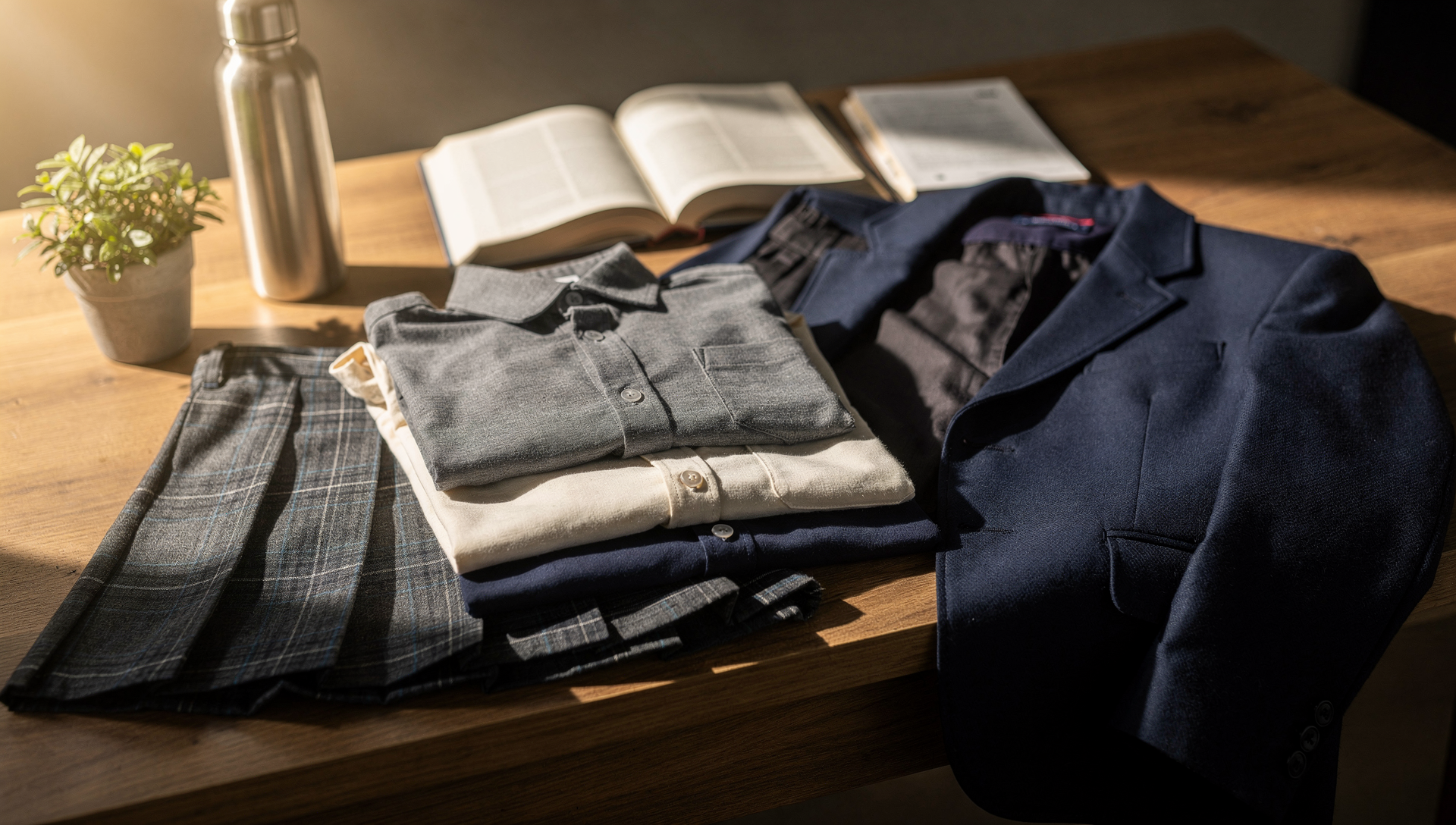
School uniform procurement affects more than budgets. With students wearing uniforms over 1,200 hours annually, sustainable school clothing directly impacts student health, environmental footprint, and institutional values. Recent chemical contamination incidents in synthetic school wear have shifted sustainability from optional to essential. This guide provides procurement teams with actionable data for making informed decisions about uniform materials, safety standards, and implementation strategies.
Understanding Sustainable School Clothing Materials
Material selection determines both environmental impact and student safety. Traditional polyester uniforms shed approximately 700,000 microplastic fibers per wash. With 540 million students wearing uniforms globally, this translates to billions of microplastics entering waterways annually. Natural alternatives offer measurable benefits.
GOTS-certified organic cotton uses 91% less water than conventional cotton while eliminating pesticide exposure. Production requires 1,800 liters of water per kilogram versus 20,000 liters for conventional cotton. Hemp fabrics last 3-4 times longer than cotton equivalents, reducing replacement frequency from every 12 months to every 3-4 years.
Recycled polyester reduces virgin plastic use but still releases microplastics. Testing shows recycled polyester sheds 300,000-500,000 fibers per wash—better than virgin polyester but significantly worse than natural fibers. Schools using recycled synthetics should mandate washing bags that capture 90% of microfibers or consider natural alternatives entirely.
- Organic cotton: 62% lower carbon emissions than conventional
- Hemp: Requires no pesticides, grows with minimal water
- Tencel: Made from sustainably managed forests, fully biodegradable
- Recycled wool: Extends fiber life without new animal inputs
Chemical Safety in School Uniforms: PFAS and Beyond
Per- and polyfluoroalkyl substances (PFAS) appear in 65% of tested school uniforms, according to 2023 research. These chemicals, used for stain resistance, accumulate in human tissue with half-lives of 3-8 years. Student exposure occurs through skin absorption, with rates increasing during physical activity when body temperature rises and pores open.
Health impacts include immune suppression, hormone disruption, and developmental delays. A Danish study found students wearing PFAS-treated uniforms showed 23% higher blood PFAS levels than those in untreated clothing. California and Maine have banned PFAS in children's products, with EU regulations following in 2026.
Beyond PFAS, conventional uniforms contain formaldehyde resins (wrinkle resistance), azo dyes (linked to bladder cancer), and optical brighteners (skin irritants). Natural fiber uniforms with plant-based treatments eliminate these exposures. Certification standards like OEKO-TEX 100 verify chemical safety, but requesting specific test results provides better assurance than relying on logos alone.
Schools should request chemical content disclosure for all uniform components, including buttons, zippers, and embroidered logos. Suppliers unable to provide detailed safety data likely lack supply chain transparency necessary for ensuring student safety.
Evaluating Sustainable School Clothing Suppliers
Supplier evaluation requires examining certifications, manufacturing practices, and supply chain transparency. Fair Trade certification ensures living wages—currently $3.21-5.50 per hour in major textile regions versus minimum wages of $0.95-2.10. SA8000 and WRAP certifications verify workplace safety and absence of child labor.
Carbon footprint varies dramatically between suppliers. European manufacturers typically generate 40-60% lower emissions than Asian competitors due to renewable energy grids and shorter shipping distances. However, some Asian suppliers invest in solar power and efficient logistics, achieving comparable or better carbon performance.
Request third-party audit reports, not just certification logos. Legitimate suppliers readily share recent inspection results. Look for detailed traceability—knowing which farms grew the cotton, which mills wove the fabric, and which factories assembled garments. This transparency indicates robust quality control and ethical oversight.
- Manufacturing location and energy sources
- Worker wage documentation
- Chemical testing protocols and results
- Fabric origin and processing methods
- Take-back or recycling programs
Total Cost Analysis for Sustainable Uniforms
Sustainable uniforms typically cost 15-30% more upfront but deliver lower total ownership costs. Natural fiber uniforms last 2-3 academic years versus 1-2 years for synthetics. Reduced replacement frequency offsets higher initial prices. Additionally, natural fibers require lower wash temperatures (30°C versus 60°C), reducing energy costs by approximately £2.50 per student annually.
Healthcare cost avoidance provides additional savings. Schools reporting reduced skin irritation complaints after switching to organic uniforms saw 40% fewer nurse visits for clothing-related issues. While difficult to quantify precisely, reducing chemical exposure may prevent future health costs related to endocrine disruption and immune dysfunction.
Consider uniform banks and exchange programs. Durable natural fiber uniforms maintain appearance through multiple owners better than synthetics. One UK school's hemp-blend uniform bank serves 300 students annually with garments averaging 4 years of use—impossible with polyester alternatives that pill and fade within months.
Factor in disposal costs. Synthetic uniforms require specialized recycling or landfill space. Natural fiber uniforms compost completely, eliminating end-of-life expenses. Some suppliers offer take-back programs, converting old uniforms into insulation or other products.
Implementation Strategy: Transitioning to Sustainable Options
Successful transitions require stakeholder engagement and phased implementation. Start with parent surveys highlighting health benefits and long-term savings. Present chemical safety data and durability comparisons. Address cost concerns upfront with total ownership calculations and hardship support options.
Phase transitions over 2-3 years to minimize waste. Begin with new students or specific year groups. Implement exchange programs for outgrown uniforms. Partner with local charities for end-of-life textile recycling. Document the transition process for board reporting and community communication.
Establish clear procurement criteria including material standards, chemical restrictions, and social certifications. Create evaluation rubrics weighting safety (40%), durability (30%), sustainability (20%), and cost (10%). This framework ensures consistent decision-making aligned with institutional values.
- Form sustainability committee including parents and students
- Conduct uniform wear trials with volunteer families
- Negotiate bulk pricing and payment plans
- Create hardship fund for financial assistance
- Measure and report environmental impact reduction
Measuring Success: KPIs for Sustainable School Uniforms
Track quantifiable outcomes to demonstrate program value. Monitor uniform lifespan through serial numbers or purchase records. Average wear should increase from 1.5 to 3+ years. Document skin irritation complaints—expect 50-70% reduction within one academic year. Calculate carbon savings using supplier-provided emissions data.
Survey satisfaction annually. Questions should address comfort, durability, and appearance retention. Typical results show 80%+ satisfaction with natural fiber uniforms versus 60% for synthetics. Track laundry feedback—parents report easier stain removal and better shape retention with quality natural fibers.
Financial metrics include total uniform spend per student per year and hardship fund utilization. Despite higher unit costs, schools report 20-40% reduction in total uniform spending due to increased durability and active secondhand markets. Document these savings for board presentations and grant applications.
Environmental impact reporting builds community support. Calculate water savings (91% reduction with organic cotton), carbon reduction (varies by supplier), and waste diversion (100% compostable natural fibers). These metrics support sustainability certifications and demonstrate institutional leadership.
Making sustainable school clothing standard requires commitment beyond procurement. It demands rethinking how uniforms serve student health, environmental stewardship, and educational values. The data supports clear conclusions: natural fiber uniforms cost less over time, protect student health, and reduce environmental impact. Schools leading this transition report improved community perception and student wellbeing. The question isn't whether to adopt sustainable uniforms, but how quickly your institution can implement change.